A new feature brings more context to hydrological forecasts by revealing the data origins behind virtual stations.
When you are managing water resources, a hydrological forecast is only as good as the data driving it. To make critical operational decisions, you don’t just need numbers, you need absolute confidence in where those numbers came from. That’s why BWI is introducing our latest addition: Inspect Data Origins for Virtual Stations.
Every forecast is the output of a model, and every model runs on input data. But where does that data come from? Data Origins answers exactly that. Previously accessible through the API, this transparency now comes to the BWI portal through a dedicated Data Origins Viewer — so you can see the exact production context behind every virtual station without leaving the interface.
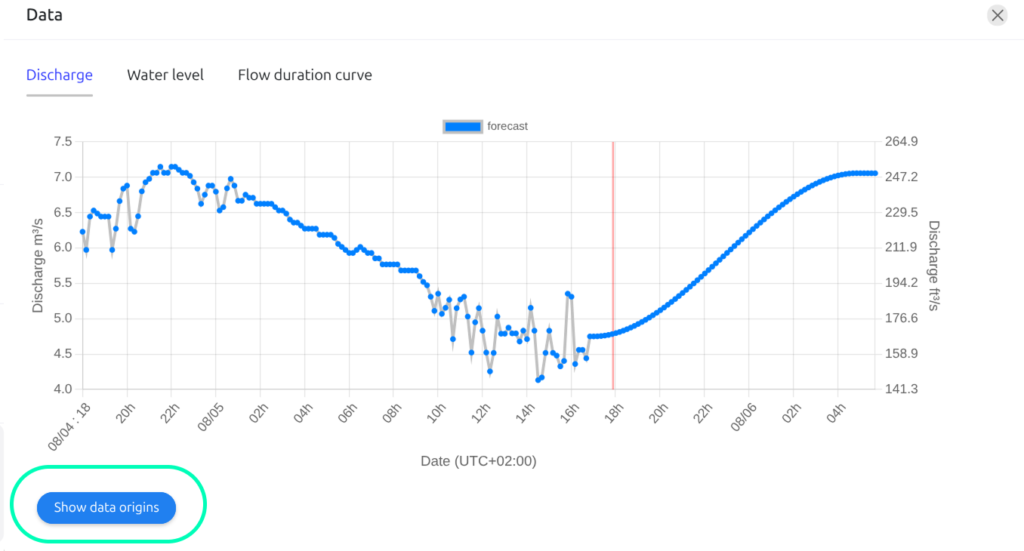
Using the new “Show Data Origins” button, you can inspect the data sources behind your forecasts directly in the portal:
By bringing full transparency into every forecast’s production context, Data Origins gives water managers something numbers alone can’t: confidence in the data behind the decision.
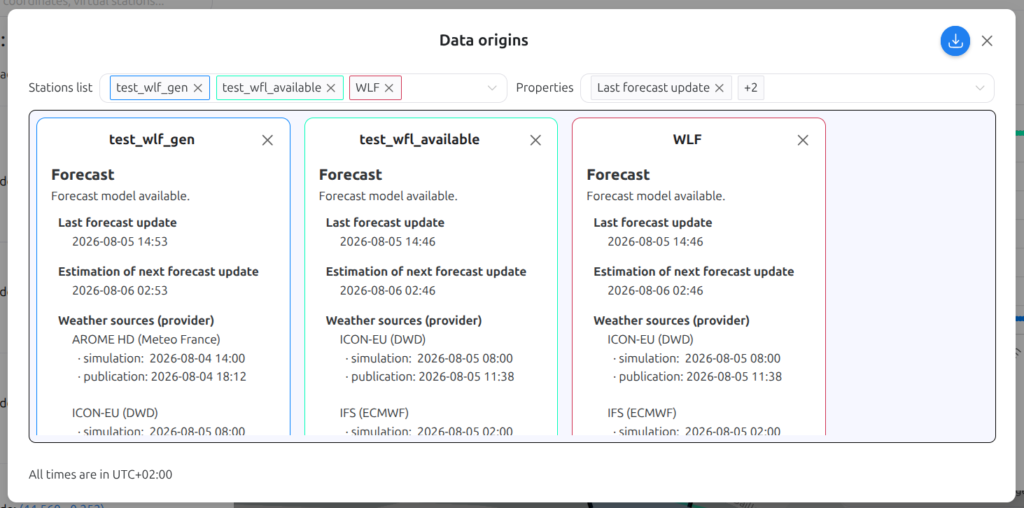
Zero Guesswork on Freshness: See exactly when your forecast was generated in the station’s local timezone, alongside the precise weather model cycle used to build it.
Track Processing & Delays Instantly: By comparing computation times against publication times, you can easily estimate total processing lag and spot any provider-side dissemination delays before they affect your workflow.
Total Traceability for Seamless Integration: Feed high-fidelity metadata directly into your internal tools and data pipelines, making compliance and documentation completely effortless.
This evolution improves the product experience by giving access not only to the forecast output, but also to the production context behind it. Users can better understand where the data comes from, when it was produced, and which weather data it relies on. This additional layer of insight strengthens traceability and makes the information easier to integrate into clients’ tools and processing pipelines.
We believe data should work for you, not the other way around. Your engineering and operational teams gain the autonomy to assess data currency and reuse information instantly. Experience a more actionable, explicit, and reliable data workflow with BWI.